pinokio.computer
Tinkerers who want to run open-source AI tools on their own computer with one click, skipping Python setup, dependencies, and the command line entirely.
About
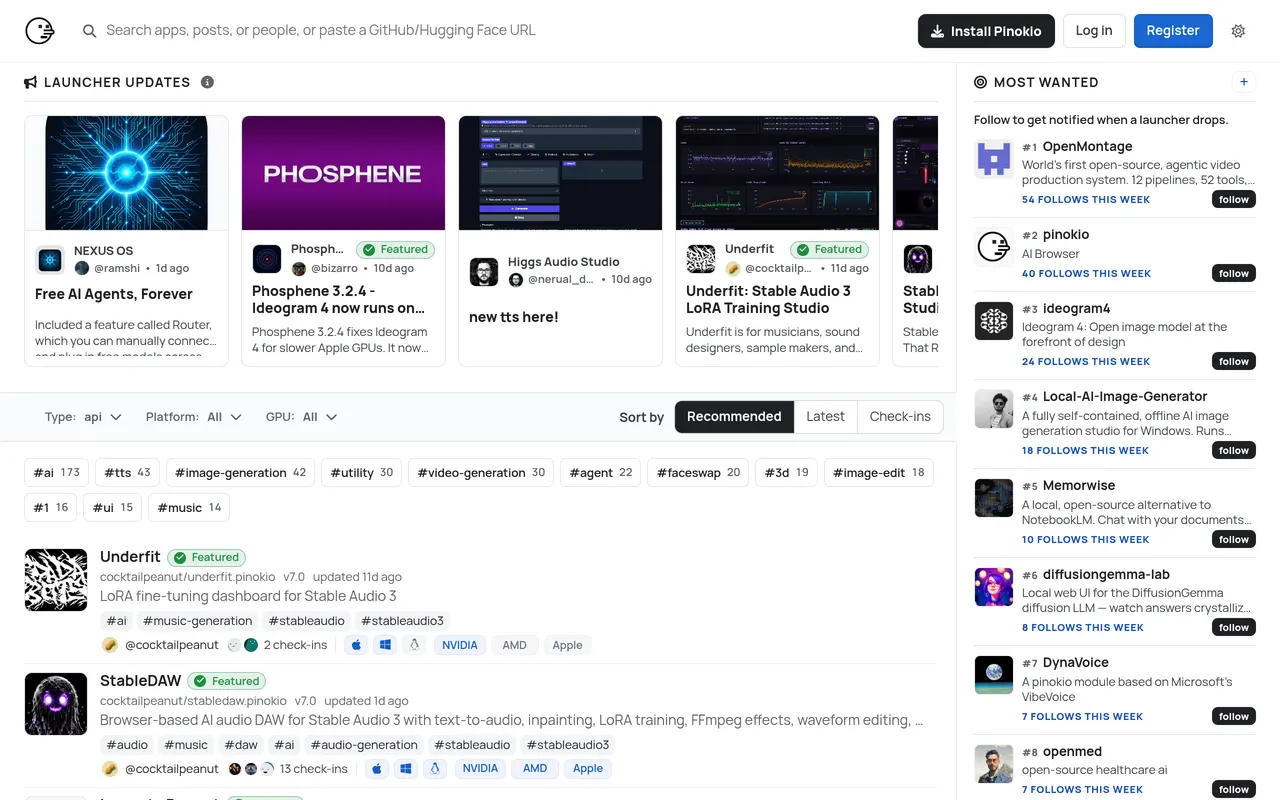
Pinokio is a browser-like app that installs and runs AI tools locally with a single click. It handles environments and dependencies for you, so you can try image generators, local language models, and more without touching a terminal. Everything runs on your own machine.
Highlights
- +One-click install for local AI apps
- +No Python or terminal setup
- +Runs models privately on your machine
Own pinokio.computer?
Claim it to manage your listing and get your badge link.
Frequently asked questions
What is pinokio.computer?
Pinokio is a browser-like app that installs and runs AI tools locally with a single click.
Is pinokio.computer free?
Yes. pinokio.computer is free to use.
What are some alternatives to pinokio.computer?
Similar sites in our directory include quiettypist.com, bestllmfor.com, wordradar.dev.
pinokio.computer alternatives & similar sites

quiettypist.com
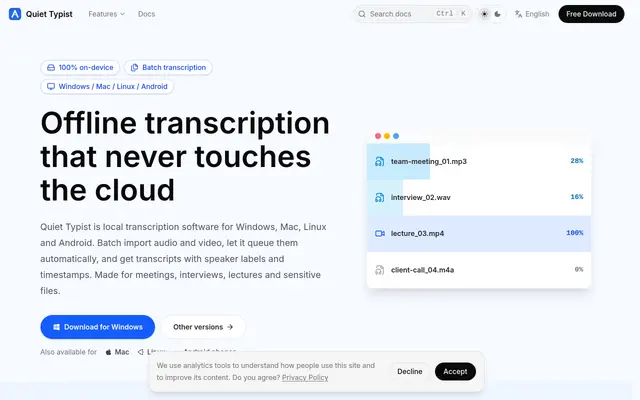
Quiet Typist offers 100% on-device transcription, meaning your audio, video, and transcripts never leave your computer or touch the cloud. It's designed for privacy-conscious users handling sensitive files. It supports batch transcription, allowing you to import multiple audio and video files at once and automatically queue them for processing. Transcripts include speaker labels and timestamps for easy review and organization. It also offers an MCP integration to plug on-device transcription into existing workflows.

bestllmfor.com
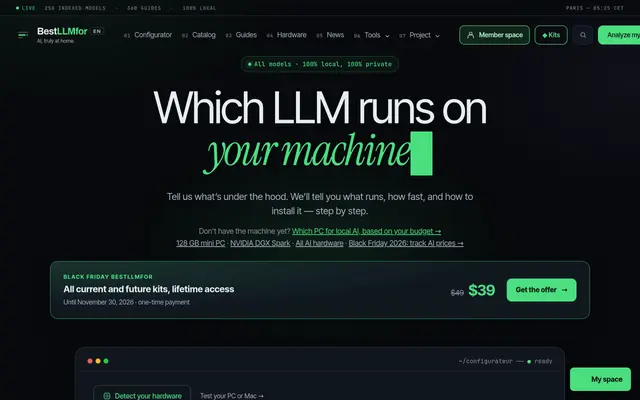
BestLLMfor helps you determine which large language models can run locally on your PC or Mac. Just tell it what hardware you have, and it will suggest compatible LLMs, estimate their speed, and provide installation instructions. The site features a catalog of over 250 indexed models and more than 360 guides for tools like Ollama and LM Studio. It also offers paid kits with comprehensive guides and configurations for specific use cases like local code assistants or private ChatGPT alternatives.

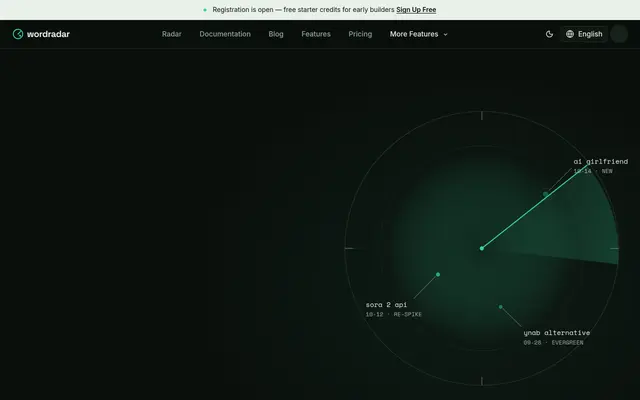
wordradar.dev
wordradar is a keyword radar for indie SEO hackers, offering a 1M-word ledger that flags brand-new search terms, an HN new-site radar, SERP difficulty scoring, and Google Trends risers. All data is served over REST and MCP, ready for integration into AI agents and workflows. The platform includes a daily updated word ledger with first-seen dates and types (new, re-spiking, evergreen), site-matching to suggest keywords for your specific sites, and tools for competitor watchlists, SERP difficulty reads, and domain timeline analysis.
Launch your
powerful website
Reach thousands of users across YouTube, Instagram and our newsletter.
- Live within 24 hours
- Custom launch video

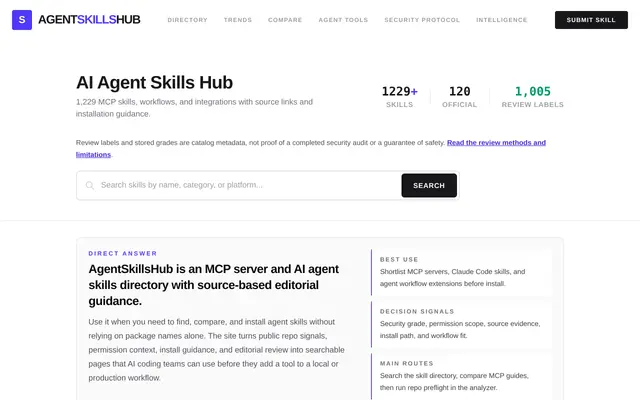
agentskillshub.dev
Agent Skills Hub is an MCP server and AI agent skills directory with source-based editorial guidance. It helps users find and install agent skills without relying on package names alone, offering detailed information like public repository signals, permission context, and installation guidance. The platform provides searchable pages that AI coding teams can use to shortlist MCP servers, Claude Code skills, and agent workflow extensions before integration into local or production workflows. It includes decision signals such as security grades, permission scopes, and source evidence.

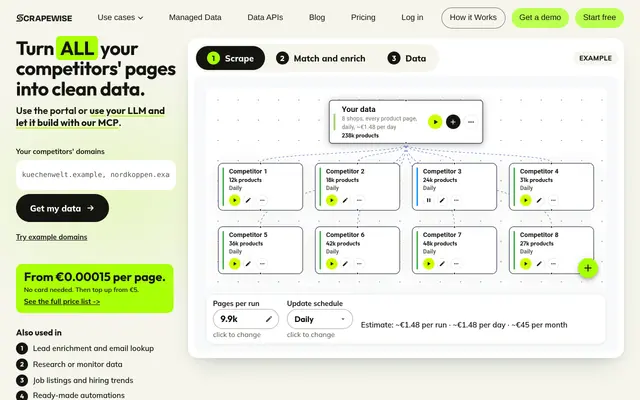
scrapewise.ai
Scrapewise offers web scraping services for various use cases, including competitor price tracking, monitoring Minimum Advertised Price (MAP) violations, and extracting product data. It supports automated collection of product specs, images, and variations from supplier or competitor sites. The platform allows users to upload a list of URLs to get clean data like price, title, and stock information. For engineering teams, a REST API with stable schemas is available to build custom data stacks. Scrapewise aims to turn competitors' pages into structured data, with pricing starting from €0.00015 per page.

llmswaps.com
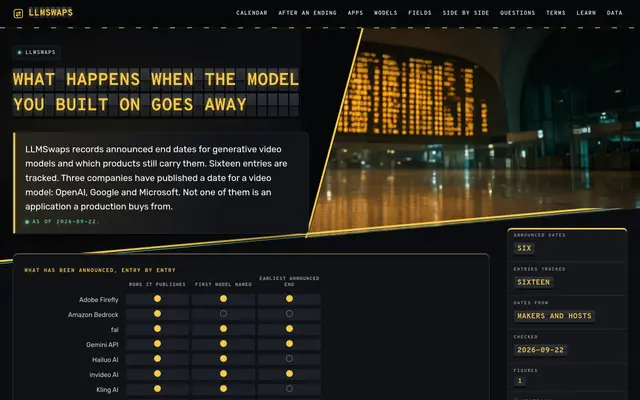
LLMSwaps records announced end dates for generative video models, detailing which products still carry them. It tracks 16 entries from three companies: OpenAI, Google, and Microsoft. The site also lists specific model names and their earliest announced end dates across various applications like Adobe Firefly, Gemini API, and Microsoft Foundry.